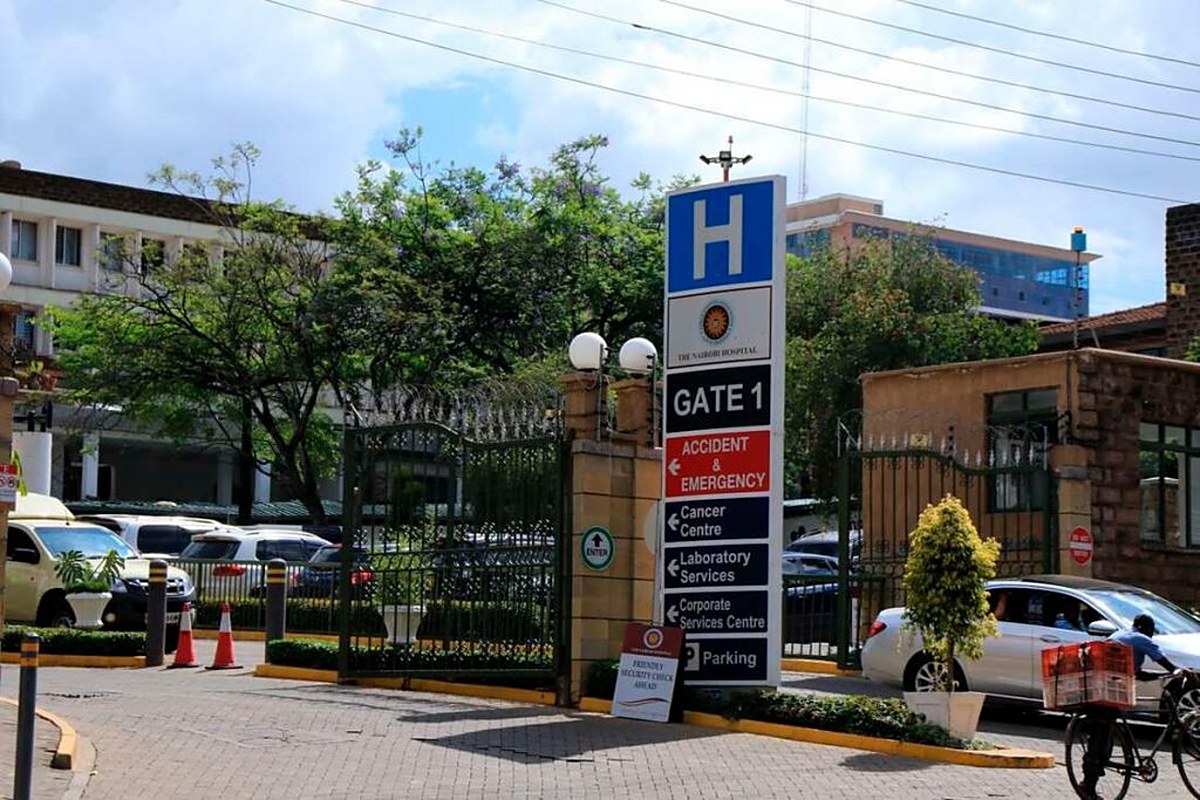
Photograph: Onyango George / EA Hospitality Pulse
Kenya made a health policy a condition of entry. A month in, Nairobi's biggest hospitals were not taking it.
Since 5 October every short-stay visitor to Kenya has had to buy a state-channelled US$50,000 travel health policy that the High Court has now upheld, and the cost to operators is not the US$48 but the fact that the country's own travel agents are telling members to keep buying private cover on top of it.
On Thursday, Ghana's Ministry of Foreign Affairs published a notice through its High Commission in Nairobi. It told Ghanaians that every non-Kenyan travelling to Kenya for a stay of under twelve months, children included, must now hold a Kenyan travel health insurance policy bought through a Kenyan government portal, and that foreign travel insurance policies "will not be accepted for compliance." The advice was sound. It was also a month and a day late: the requirement took effect on 5 October. Zambia's foreign ministry had got there on 27 October, three weeks after the gate closed.
That lag is not the story, but it is a useful measure of one. A rule that reaches source markets by diplomatic note, a month after enforcement begins, has not reached them through the trade. And the reason it has not is that the people who sell Kenya have spent since July trying to establish what the rule actually is, and are still trying.
The instrument is Gazette Notice No. 11492, signed by the Cabinet Secretary for Health, Aden Duale, and dated 29 July 2026. It was issued under section 26(6) of the Social Health Insurance Act 2023 and Regulation 70(2)(b) of the Social Health Insurance Regulations 2024, which is to say under health law rather than immigration or insurance law, a choice that would shortly be tested. It requires a short-stay visitor to hold cover with cumulative benefits of at least US$50,000, built from sub-limits: US$20,000 for medical expenses, US$25,000 for emergency medical transport, US$5,000 for repatriation of remains, US$1,000 for treatment of mental illness and US$300 for prescribed medicines. Add those five and you get US$51,300, which does not equal US$50,000. That is the first sign of how closely this was drafted.
The second came nine days later. On 7 August the Ministry of Health issued a clarification, over Duale's signature, saying a traveller could use insurance bought at home provided it met those benefit levels. Operators could work with that. It meant a European client's existing policy, which routinely carries evacuation cover far above US$25,000, would satisfy the requirement, and the lodge's job was a document check. Thirteen days later, on 20 August, at a stakeholder meeting convened by the State Department for Immigration and Citizen Services, the industry was told the opposite: a standard foreign-issued policy would not satisfy the requirement, and cover had to come from the Kenyan arrangement. Evelyn Cheluget, the Director General of Immigration Services, and Isaac Ochieng, the Director General of eCitizen, set out the operating model.
The version that went live is the second one. Today the only route is Kenya's own: the policy is bought inside the electronic travel authorisation flow at etakenya.go.ke, or separately through eCitizen's inbound travel health insurance service, which asks for passport details, trip dates and a photograph that the system compares against the passport image. Premiums tested in October came out at US$44 plus a US$1 access fee for an adult, reaching about US$48 at checkout once payment charges were added, and roughly half that for a minor. The EastAfrican put the traveller's total at US$52, which alongside the US$30 eTA makes US$82 of Kenyan government charges per head before anyone has sold a bed night. Children under three are exempt. Children over three are not, and need policies of their own.
For a safari itinerary, US$48 is nothing. The number was never the exposure. The exposure is that this is the first charge in the chain that the seller cannot transact. A ground handler can pay a park fee, a conservancy levy, a visa fee or a domestic airfare on a client's behalf. It cannot sit at a laptop in Nairobi and complete a purchase that wants the traveller's own photograph checked against the traveller's own passport, for each member of a family, as a condition of boarding. Airlines have been asked to request proof at check-in; immigration officers verify it at the desk through a validator application. So the operator carries full responsibility for an outcome at the airport, with no ability to produce it, and no way to confirm in advance that forty people on a group departure have each done their part.
Then there is the question of whether the thing being bought works. On 23 October The EastAfrican reported that a month into the scheme, tour operators were finding that clients could not use the mandatory cover at Kenya's major private hospitals. Nairobi Hospital was not accepting it. Its chief executive, Felix Osano, declined to explain why, telling the paper by email that "the scheme is administered by the government, so questions on its implementation" were for the state. Management at Aga Khan did not respond to the same question. The Ministry of Health did not answer queries about which insurers provide the cover or which hospitals accept it. An operator who asked not to be named said travellers had "no channel whatsoever available for recourse."
This is the part that should concentrate the mind of anyone running a camp in the Mara or a beach hotel in Diani. The two institutions a lodge would actually use, if a guest came off a game drive with a fracture or arrived in Nairobi with chest pain, were reported as not taking the policy the guest was compelled to buy. A US$25,000 evacuation sub-limit is of no use if the receiving hospital will not bill against it. And a lodge that reassures a guest at the point of sale that cover is in place has made a representation it cannot support.
The trade's own advice reflects that. Nicanor Sabula, chief executive of the Kenya Association of Travel Agents, put the position plainly: "The challenge we still have as an industry is that there's no clarity on this insurance." KATA is advising its members to keep buying private cover. Read that again, because it is the operative fact of the whole scheme. The country's travel agents are telling the people who sell Kenya to treat a compulsory insurance policy as a tax, and to insure the client properly, separately, as before. The guest pays twice. Once because the law says so, and once because the law's product may not pay.
KATA's own letter, dated 7 October and addressed to Cheluget, had asked for the basics: confirmation of the effective date, the scope of implementation, the affected traveller categories, the approved insurers, the premiums, the coverage and the exclusions, "given the abrupt rollout and limited information available to travel agents." A month on, some of that is clearer and some is not. The Insurance Regulatory Authority has named seven participating insurers: First Assurance, AAR, Britam, CIC, Pioneer, Fidelity and Star Discover General, with Minet Kenya as programme administrator rather than underwriter. Earlier Ministry of Health guidelines had listed fourteen, including the state-owned Social Health Authority, and the selection ended in litigation. Even the validity period is contested in official material: quotes generated in October showed a cover period of three months, while the Kenya Tourist Board's own frequently asked questions and KATA's August briefing both described a policy running for a year. For a tour operator writing a multi-entry itinerary across the long rains, the difference between ninety days and twelve months is the difference between one purchase and three.
What the industry no longer has is a legal argument. Two Marsabit residents, Edow Issack Mohammed and Zhulekha Mohamed Edin, challenged the notice, and in late August Justice Francis Rayola Olel suspended it, the petitioners arguing in part that a health ministry was instructing immigration on a matter reserved elsewhere. In the first week of October the same judge dismissed the petition, holding that the gazette notice and its explanatory memorandum were lawfully made under the Social Health Insurance Act and its regulations, and that immigration officers may verify whether a traveller holds the required cover without usurping the Insurance Regulatory Authority. The suspension that had kept the scheme off the books through September went, and the requirement has been in force since.
Mohammed Hersi, who has spent thirty years in Kenyan tourism, published the sector's sharpest objection on 12 October and has not been answered. He called the measure "a tax wearing a stethoscope" and argued that the premise is wrong: "The tourist was never the problem." Long-haul visitors to Kenya already arrive with comprehensive cover including evacuation, and are not the people filling public wards. His list of fixes is practical rather than rhetorical: accept existing cover that meets the US$50,000 standard, exempt children and group departures booked through licensed Kenyan destination management companies, exempt visa-free African nationals, freeze enforcement on tickets sold before 5 October, and take airlines out of enforcement by moving verification to the immigration desk. On the court ruling he was precise, and the distinction is the one that matters commercially: "a policy can be legal and still be a mistake." On the retroactivity, which lands on contracts signed months ago at prices that cannot now be revised, he was blunter: "Retroactivity punishes our partners for trusting us."
That last point has a European dimension that few Nairobi operators have priced. Under package travel rules, a quoted and accepted price cannot be moved except within narrow contractual limits, which means a new per-head government charge on a 2026 or 2027 departure already sold is absorbed somewhere in the chain, and the chain's weakest link is the ground handler. Professional associations have already raised it. A family of four, two adults and two children over three, now adds roughly US$150 of insurance to a trip that was contracted without it.
There is a version of this that works. Georgia and several Caribbean markets accept qualifying foreign cover against a published benefit standard, which gets the state its risk transfer without a second sale, and Kenya's own 7 August clarification described exactly that model before it was withdrawn in a meeting room. Reinstating it would cost the exchequer the premium income and almost nothing else.
Until then, three things are worth doing this month. Write the requirement, the purchase link and the exemptions into every booking confirmation and every pre-departure pack, by name, because the trade is now the communication channel and foreign ministries are a month behind. Put a government-charges clause into every 2027 contract still open, since this is the third new per-head charge in the region inside fourteen months and will not be the last. And get a written answer from your emergency evacuation provider and your nearest referral hospital on whether they will bill against the mandatory policy, because the gap between a policy a guest must hold and a policy a hospital will take is, for now, the lodge's problem to manage.
The things to watch are narrow. Whether the Ministry of Health publishes a hospital network that actually accepts the cover. Whether the three-month and twelve-month readings of validity are reconciled in writing. And whether any of Hersi's five fixes is adopted, because the measure of this policy will not be the US$48. It will be whether the first guest who needs it discovers, in an emergency room in Nairobi, that the only insurance Kenya would let them buy is the one nobody there will take.
📣 Telegram 💬 WhatsApp 💼 LinkedIn 📚 All guides