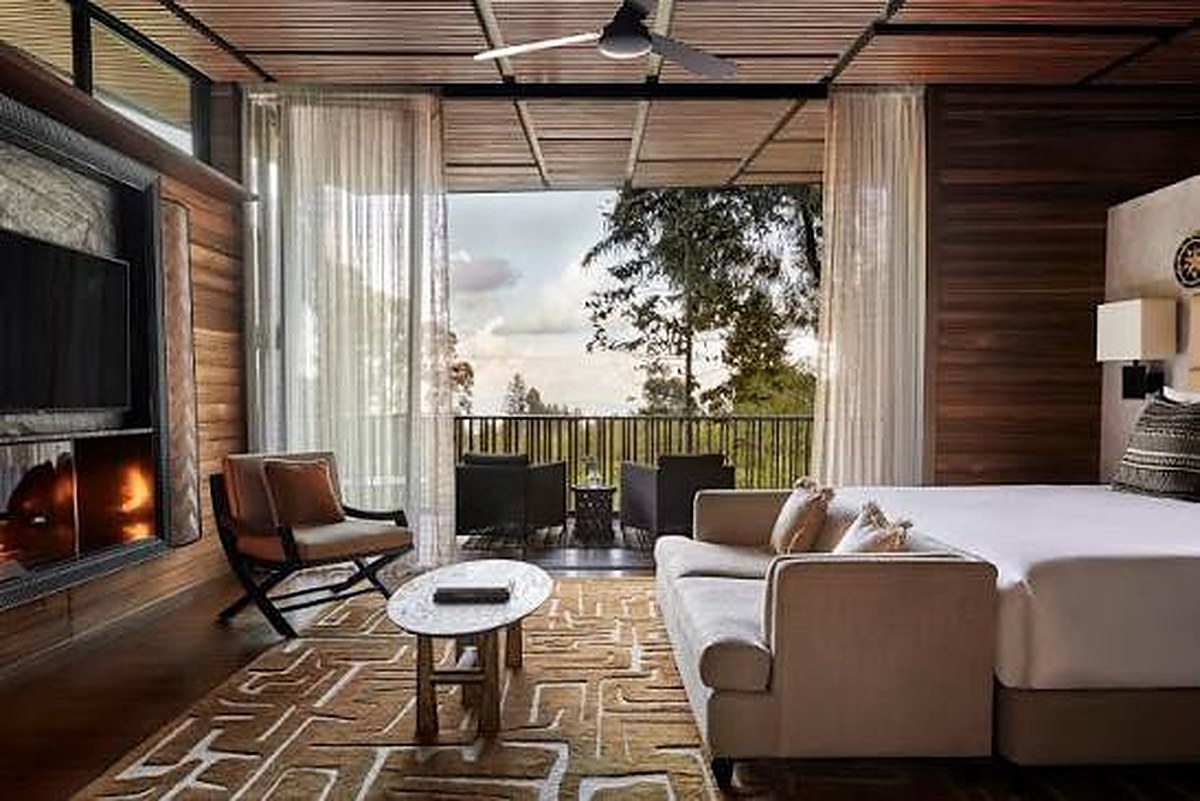
Photograph: Onyango George / EA Hospitality Pulse
Nobody will ask your lodge to change its name. That is what the brands are now selling East Africa.
On one Tuesday last week the world's hotel groups told investors that their growth now comes from buildings they do not own and names they do not change. East Africa's independents are the buildings, and the fine print is about distribution, not identity.
On the morning of 27 October, in Phoenix, Arizona, BWH Hotels announced that more than 4,000 hotels across eighteen brands in over a hundred countries would be gathered under a single masterbrand called WorldHotels, with one loyalty programme to replace two. Nothing above the front doors will change: the release is explicit that individual property names, signage and flags stay as they are and that each brand's identity is preserved. Ron Pohl, who runs the new WorldHotels Collection, described the platform as sitting "at the intersection of independence and scale."
Hours later, Preferred Hotels & Resorts announced that twenty eight hotels had joined its membership in the three months to 30 September, its largest quarterly intake since 2024. One of the twenty eight is in Africa, a restored palace in Fès. None is in East Africa. And on the same day, Hilton reported third quarter results showing a record pipeline of 543,100 rooms and the largest organic openings quarter in its history.
Three announcements, one Tuesday, and a single commercial fact underneath all of them: the fastest growth in branded hospitality is no longer coming from building hotels or from persuading owners to rename them. It is coming from affiliation. Hilton told investors that conversions made up 37 per cent of its third quarter openings, and that over the previous twelve months its new hotels had arrived carrying the signage of nearly sixty different brands. Christopher Nassetta, Hilton's chief executive, put conversions at roughly 40 per cent of growth for the full year.
For East Africa's independent lodges, camps and city hotels, this is the most consequential shift in the branding conversation in a decade, and it is being discussed almost entirely in the wrong terms. The question operators are being asked to consider is whether to join a collection. The question they should be answering is narrower and much less flattering: what share of my room nights would this affiliation actually originate that I cannot already reach, and what is the median outcome, not the average one.
Start with why the offer is arriving at all. Patrick Scholes, the lodging analyst at Truist Securities, named the pressure plainly in January: "There's a lot of pressure from Wall Street to continue to find ways to grow net-unit growth." Affiliation is the cheapest net unit growth in the industry. It requires no construction, no conversion capital from the brand, and in the case of a collection, no demand that the owner surrender a name that may be the most valuable thing they own. Accor's third quarter, published on 22 October, showed net unit growth of 3.0 per cent against a pipeline up 9.5 per cent. IHG, reporting the same day, put net system growth at 4.9 per cent across roughly 7,200 hotels. Chekitan Dev, who studies hotel branding at Cornell, describes what collections promise owners as "the best of both worlds: individuality plus the commercial engine of a major brand."
East Africa is a target for a reason that has nothing to do with sentiment. In a quarter when Greater China's revenue per available room fell 3 per cent for IHG, when the six Gulf states fell 12 per cent, and when the United Arab Emirates was still running about 20 per cent below the same period last year for Accor, Africa was one of the few places the numbers moved the right way. IHG reported African revenue per available room growing in the mid teens. Accor's Middle East, Africa and Asia Pacific region grew 3.6 per cent, and did so purely on price. That combination, rate that is holding and supply that is being built, is what a development team looks for.
The supply side is the other half. W Hospitality Group's annual survey put Africa's hotel development pipeline at a record 123,846 rooms across 675 properties, up 18.6 per cent year on year, with global chains accounting for roughly 80 per cent of it. Egypt and Morocco hold more than 45 per cent of the rooms. But the more telling number for this region is not pipeline size, it is the share of pipeline actually under construction. Kenya and Ethiopia each have close to 80 per cent of their pipeline rooms on site, Tanzania 77.5 per cent. "Kenya, Ethiopia and Tanzania show some of the highest construction ratios on the continent," said Trevor Ward, the firm's managing director. Rooms under construction become rooms needing distribution, which is the product a collection sells.
Some of this has already landed. Curio Collection by Hilton made its East African debut in March 2024 with Kwetu Nairobi, a 102 room property assembled from five interconnected buildings on the edge of Karura Forest, a house that had been a guest house and then a boutique hotel before it carried a Hilton descriptor after its own name. In October 2025 Hilton signed three Tapestry Collection properties into sub-Saharan Africa at once: the 91 room Ava Hotel Nairobi in Lavington, the 80 room Zaria Court Kigali, and The Sterling Hotel in KwaZulu-Natal. The Kenyan and Rwandan properties are managed by Aleph Hospitality, not by Hilton. By March this year the group reported 70 trading hotels in Africa with more than a hundred under development across thirteen brands, after a record twenty nine deals signed in 2025 across fifteen countries. "Sub-Saharan Africa remains a strategically important growth region for Hilton," said Carlos Khneisser, its development chief for the Middle East and Africa. Curio and Tapestry each passed two hundred open hotels this year, with 120 and almost 150 respectively still in development.
So the offer is real, the pipeline is real, and the brands' need for it is real. What has not been done honestly, anywhere in the sales material, is the arithmetic.
It can now be done, because American franchise disclosure rules force the brands to publish performance data they would otherwise keep. Markus Busch, writing on 23 October, read Item 19 of this year's Curio Collection and Autograph Collection disclosure documents, and the numbers deserve to be read slowly. Across thirteen Curio conversions in the United States, revenue per available room rose 30.5 per cent, from $131.76 to $171.94, after affiliation. That is the figure a development executive will put on a slide. The figure that matters more is the next one: of the eleven franchised hotels in that sample, two reached the average. The median gain was 19 per cent. Marriott's Autograph sample, thirty one hotels converted between 2015 and 2022, showed revenue per available room up 22.4 per cent in the first year, with ten of the thirty one reaching that first year average. Both samples start from occupancies that were plainly weak, 58.5 per cent for the Curio group and 64.6 per cent for Autograph, and both include only hotels still flying the flag, which quietly removes the owners for whom it did not work.
The channel data is where an East African operator should linger. For 130 Autograph hotels, Marriott's own reservation channels delivered 75.1 per cent of room nights in 2025. Inside that number, Marriott.com accounted for 47.3 per cent of bookings, the global distribution systems 16.6 per cent, and online travel agencies 7.6 per cent. The last two are channels any independent lodge in Kenya or Tanzania can already reach, and already pays for. The genuinely exclusive contribution of the flag is closer to half the headline, not three quarters of it. Loyalty tells a similar story with a wider spread: members filled 75 per cent of occupied rooms on average across sixty three comparable Curio hotels, but individual properties ranged from 35.9 per cent to 92.7 per cent, and the count includes rooms given away on points.
None of this says affiliation is a bad deal. It says the distribution of outcomes is wide, skewed, and almost entirely determined by whether a particular property sits in the path of a particular brand's existing member traffic. That is a question about your market, not about the brand's. A tented camp in the Mara that already fills 60 per cent of its nights through a dozen specialist safari agents and a repeat direct guest list is buying something very different from a 90 room Nairobi business hotel chasing corporate rate agreements and GDS visibility. The second may find a collection transformative. The first may be paying a fee stack to be listed alongside properties whose guests were never going to come.
Neither BWH's announcement nor Preferred's discloses what any of this costs, and no comparable disclosure exists for East Africa at all. The published evidence is American, read through a secondary analysis, and transposed onto a decision being made in Nairobi or Arusha. An owner should treat it as the best available guide to the shape of the outcome, not to its size.
There is a second risk, and the events of 27 October are the cleanest illustration of it anyone could ask for. The thing you sign is not necessarily the thing you will be inside. More than 4,000 hotels woke up last Tuesday to find their parent reorganising around a masterbrand they had not chosen, with the two loyalty programmes they had been sold being merged into one that launches on 5 January 2027. The detail of how that merger works will not be published until 16 November. Preferred's quarterly intake, meanwhile, is a reminder that a collection's demand base is wherever its members are, and on current evidence that is Europe, Asia and the Americas, with one hotel in Morocco and nothing in this region.
The alternatives are not nothing. Shannon Knapp, who runs The Leading Hotels of the World, draws the distinction bluntly: "We are not a unit-growth company." Her group accepts roughly 5 per cent of the six hundred odd enquiries it receives each year, and Relais & Châteaux takes about thirty from six hundred applications, which is a different proposition from a platform whose growth target is its reason for existing. The other route is the one African Hotel Development took in June 2025, handing twenty six ONOMO hotels across fourteen countries to Aleph Hospitality to operate while keeping the brand itself. "We retain full strategic control over the future of the ONOMO brand," its chief executive Julien Renaud said, describing the logic as separating operations from ownership and brand development.
That is the frame East Africa's independents should bring to the meetings that are coming, and they are coming. The brands have conceded the name, which is a real concession and worth something. But a concession on identity is not a concession on economics, and the two have been deliberately bundled. When the development executive arrives with the 30 per cent slide, the question is not whether the collection will lift your occupancy. It is what the median member did, what share of the promised contribution is a channel you already hold, and what happens to this agreement the next time a parent company decides to reorganise around a masterbrand.
📣 Telegram 💬 WhatsApp 💼 LinkedIn 📚 All guides